Ultrasound-Guided Joint Injections in Chatham-Kent
If joint or soft tissue pain is getting in the way of your work or daily life, a focused assessment and ultrasound-guided injection may be an option. Offered in downtown Chatham by a nurse practitioner.
Why ultrasound guidance?
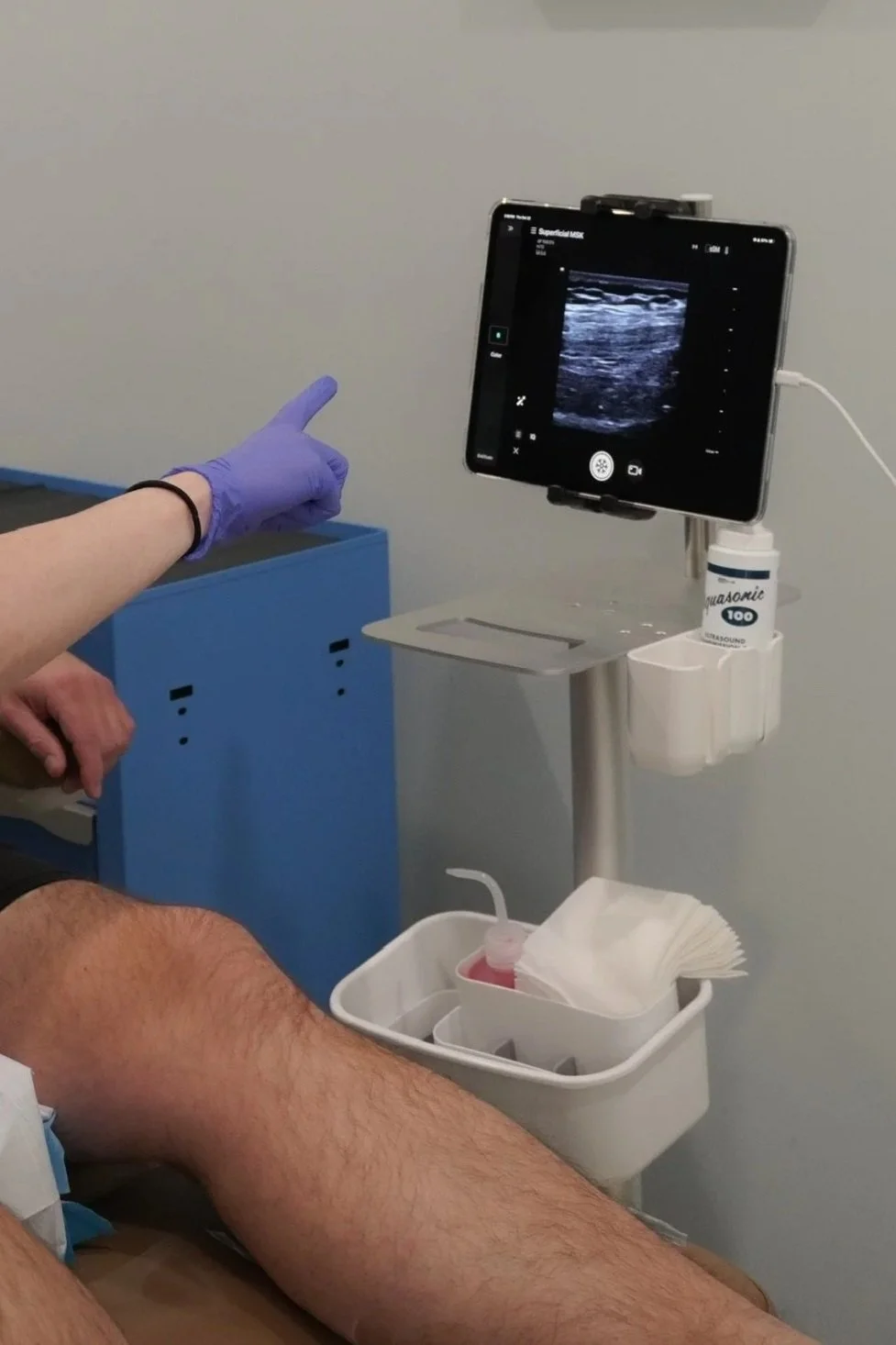
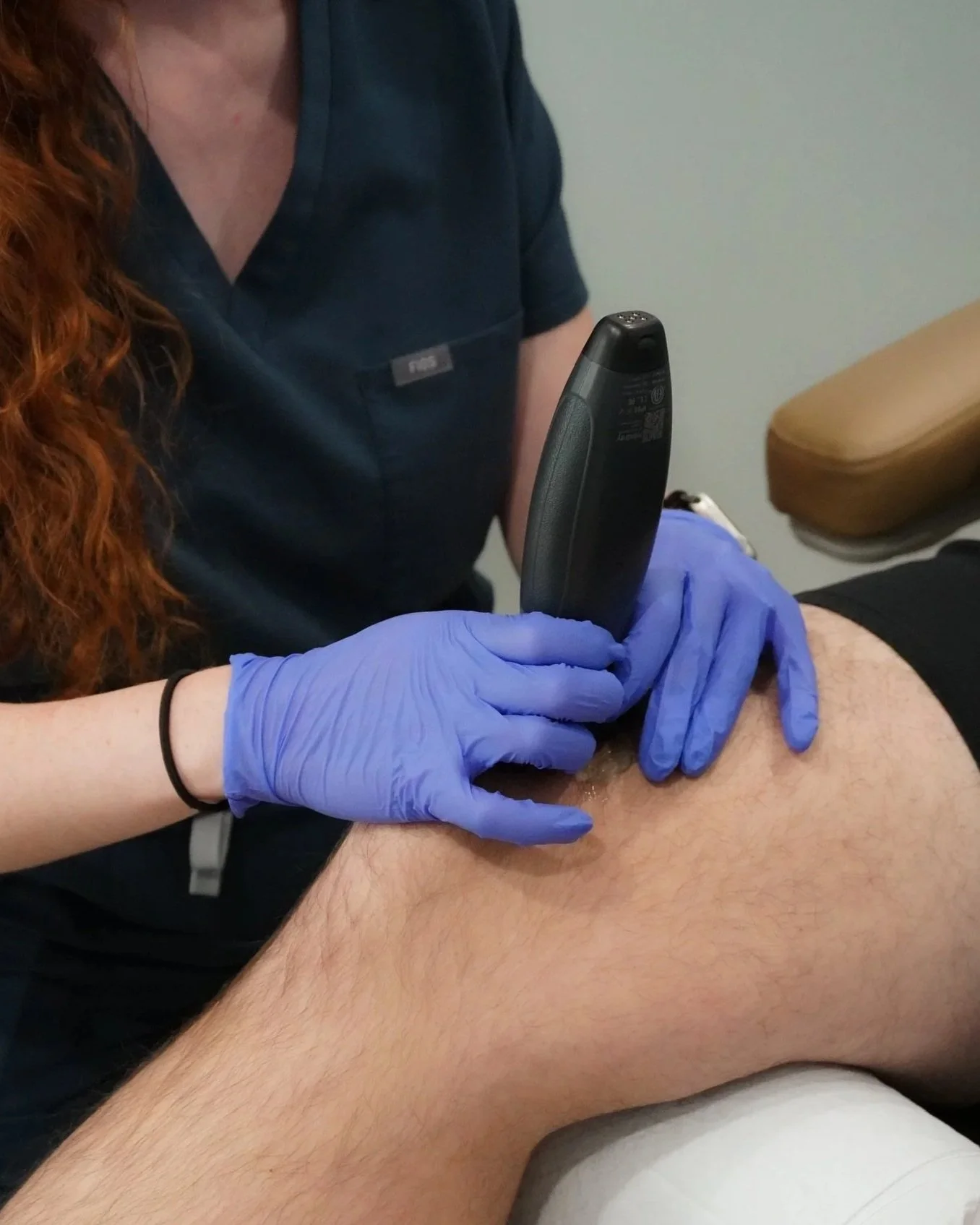
Ultrasound lets me see the joint or tissue, the needle, and the target on screen while the injection is happening. This helps place the injection precisely where it’s intended, rather than relying on landmarks alone.
Who it may be for
If pain in your shoulder, knee, elbow, wrist, or fingers is affecting your daily life, an injection may be one option to consider. Whether it’s right for you depends on your history and examination, which is why we begin with a consultation.
What’s included?
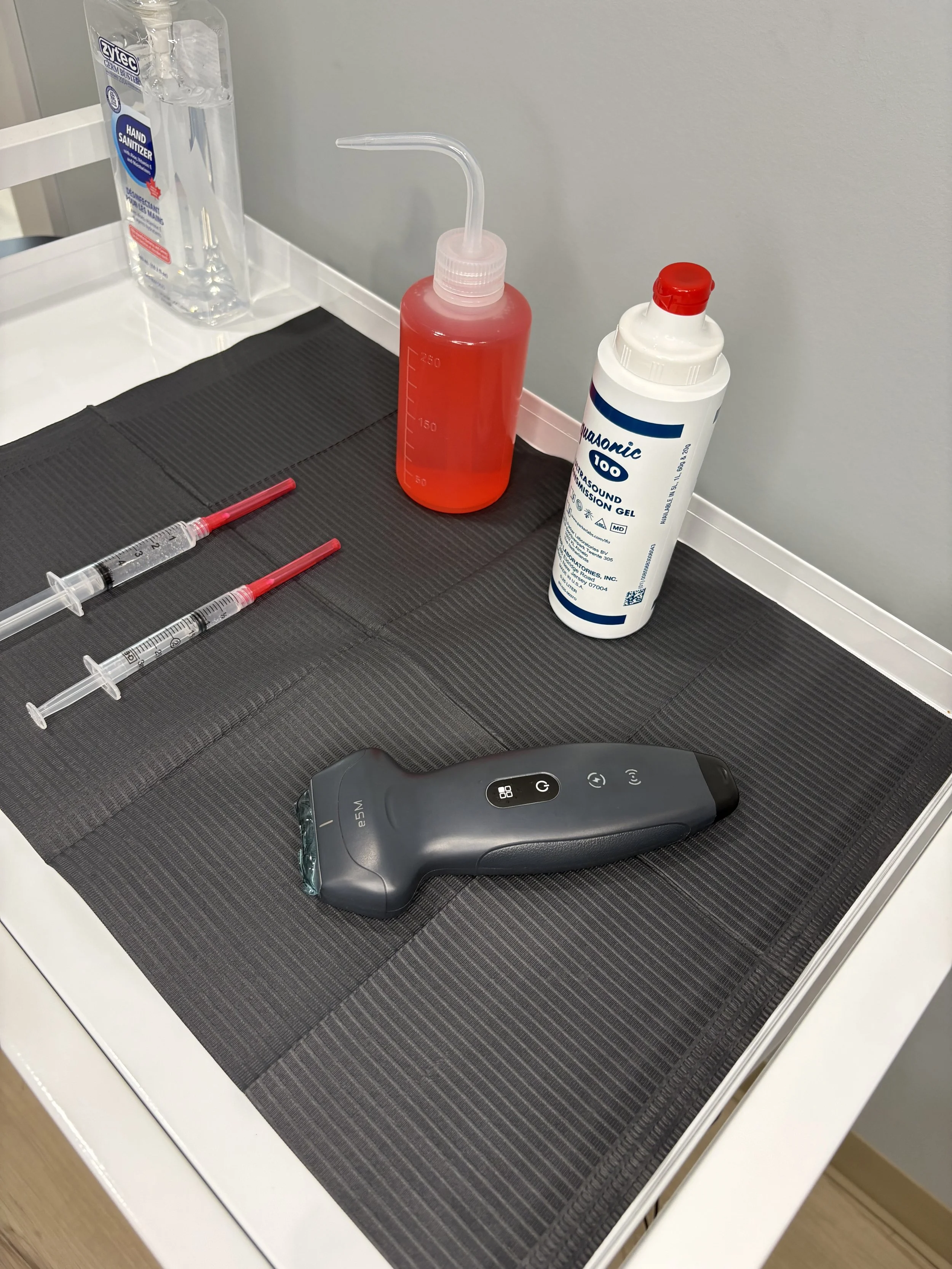
Visit 1: Consultation and ultrasound assessment. Your history, previous treatments, and examination of the affected area, plus an ultrasound scan of the joint or tissue.
Visit 2: Ultrasound-guided injection, if it’s a good fit for you.
Aftercare guidance on what to expect and when to follow up.
What to expect
Your first visit is a consultation, usually about 30 minutes. We’ll talk through your history, examine the area, and review the ultrasound images together to decide whether an injection is right for you. If it is, we’ll book a second appointment for the injection itself. Most people can go home right after the injection and return to light daily activities the same day. I’ll give you specific instructions for your situation, including any activity restrictions, and we’ll go over risks and what to watch for before you leave.
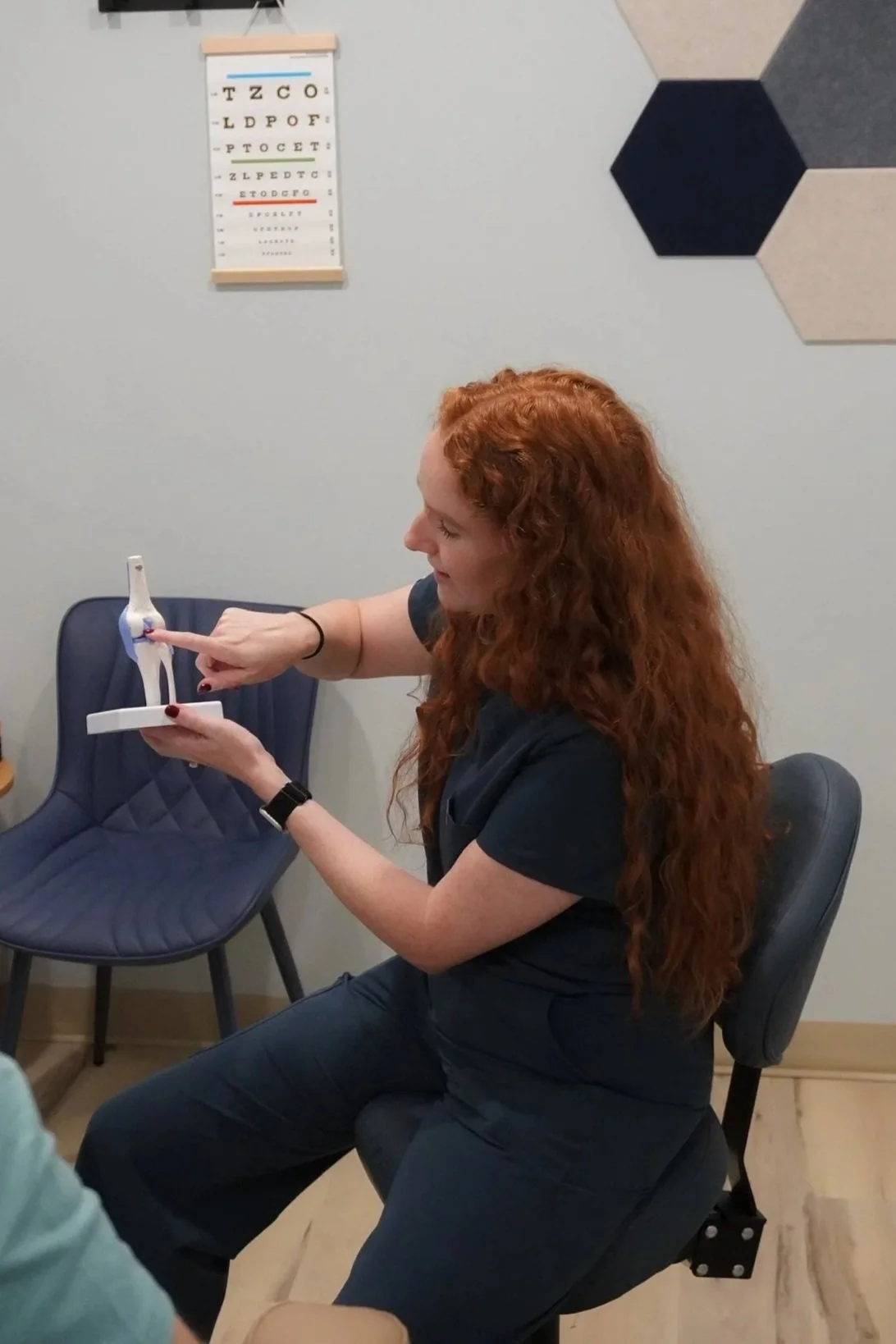
Injection Options
The right injection depends on your condition, your history, and your goals. At your consultation, we’ll talk through which option, if any, makes sense for you
Corticosteroid. A medication that reduces inflammation and can ease pain in conditions such as osteoarthritis flares, bursitis, and tendon irritation. Relief often begins within days and may last weeks to months, though this varies from person to person.
Hyaluronic acid. A gel-like substance similar to the natural fluid in your joints, most often used for knee osteoarthritis. It may take a few weeks to notice an effect.
Prolotherapy. An injection of a dextrose (sugar) solution into or around an injured joint, ligament, or tendon. It’s sometimes used for chronic joint and soft tissue pain, and it’s usually given as a series of treatments rather than a single injection.